
Content Strategy, Development, and Design Services for Small & Medium Businesses, Enterprises, and Entrepreneurs
Content Strategy and Development Services
Empower Your Brand with MVW – MediaValueWorks
Transform your business with compelling content strategies, expert development, and engaging designs. Whether you’re a Small & Medium Business (SMB), a growing Enterprise, or a thriving Entrepreneur, MVW offers tailor-made content solutions that bring your vision to life.
About MVW – MediaValueWorks
MVW – MediaValueWorks is an ISO 9000-2015 certified agency, incorporated in 2013 in India and in 2019 in the US. With a global footprint, we are a leading Global PR, Branding, and Reputation Management agency, directly accessing over 1 million media outlets across 100 countries in 25 languages.
We help businesses connect with their audiences through impactful content across traditional and digital platforms, driven by cutting-edge Media Monitoring tools to measure impact.
Global Presence:
Our offices are strategically located in Singapore, Dubai, Washington, and Toronto, New Delhi, Mumbai, Bangalore, enabling us to serve clients across North America, South America, Asia Pacific, Europe, the Middle East, and Africa.
Our Core Services:
Strategic content leverages your brand’s potential with your business objectives
We analyze your macro & micro target markets to create a roadmap to achieve desired outcomes for our clients. Our expertise includes:
- Social Media Management
- News Letter Customers
- Press Releases Management
- Blog Development & Publishing
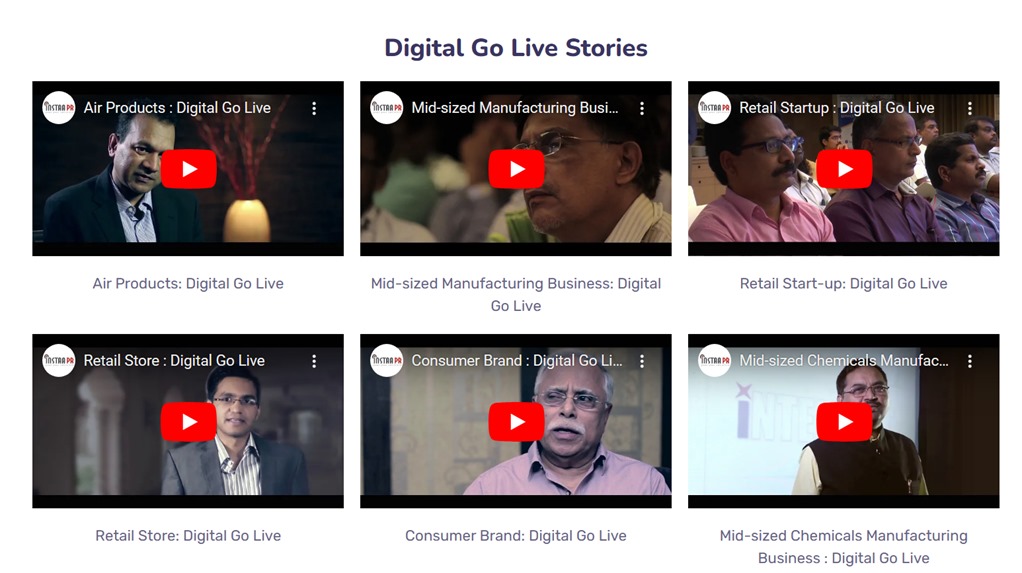
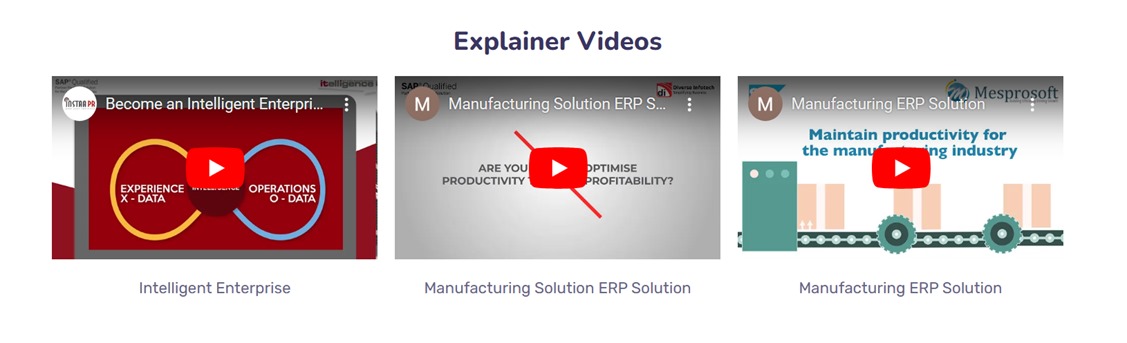
- Short Explainer Videos/ Product Tutorials
- Speaker opportunities
- Awards Nominations
- CEO/ Leadership Interviews
- Website updates & Maintenance
- Search Engine Optimization (SEO)
- Performance Marketing

Content Development:
Create captivating, purpose-driven content for every platform, every audience:
- Press Releases: Establish your brand’s credibility with impactful, newsworthy announcements.
- Whitepapers: Showcase your expertise and authority in your field.
- Articles & Blogs: Engage and inform your audience with well-researched, value-driven content.
- Videos & Web Content: Captivate your audience with visually stunning, story-rich media.
- Brochures & Print Content: Combine creativity and information to create high-impact marketing collaterals.
We deliver end-to-end creative content that aligns with your brand’s voice, speaks to your audience, and drives engagement.

Content Design:
Seamlessly blend creativity with functionality. Our team designs visually stunning, user-friendly content that not only captures attention but also prompts action. From website design to social media creatives, our design expertise ensures that your content is accessible, engaging, and aesthetically aligned with your brand.
Why Choose MediaValueWorks?
- Industry Expertise: With over 20 years of experience in public relations, branding, and media outreach, we know what it takes to stand out in today’s competitive market.
- Custom Solutions: We offer tailored content solutions for businesses of every size, ensuring that our services meet your unique goals.
- Proven Results: Our strategies are designed to deliver measurable results—building credibility, increasing visibility, and driving engagement.
- Global Reach, Local Impact: With our wide network, your content gets the attention it deserves both locally and internationally.
- Dedicated project management starts at USD 5K per month.
- For more information write to editor@mediavalueworks.com
Contact Us
Awards received by MediaValueWorks - Your Digital Communications Partner
1. 2023 Atlas Lifetime Achievement Award for Contributions to International Public Relations from PRSA (Public Relations Society of America)
2. 2023 Ph.D Award in Global Marketing & Communications by Ecole Superieuere Robert de Sorbon, France University thru VAE – Validation of Acquired Experience
3. 2021-22 Woman of Excellence Award – By Indian Achievers’ Forum
4. 2023 and 2021 Featured Dr Chowdhary in the Top 100 Most Important Professionals Published by Reputation Today Magazine
5. 2022 and 2021 — Featured Dr Chowdhary in Top 100 Influential Game Changers List
6. Reputation Today Featured MediaValueWorks in the Next 50 Public Relations Firms – 2021
7. MVW Receives Excellence in Video Communications – Gold Winner – By AdGully 2021
8. MVW Receives Excellence in Reputation & Issues Management – Silver Winner – By AdGully 2021
9. MediaValueWorks Featured as Most Promising PR Agency of 2015 – By Silicon India
10. MediaValueWorks Featured as Most Valuable Marketing Tech 50 Valuable Companies – Insight Success 2018
11. MediaValueWorks awarded ‘Image Champions – Public Relations Programs’ for Digital Excellence by the ‘2013 Paul Writer Excellence in Realty Marketing
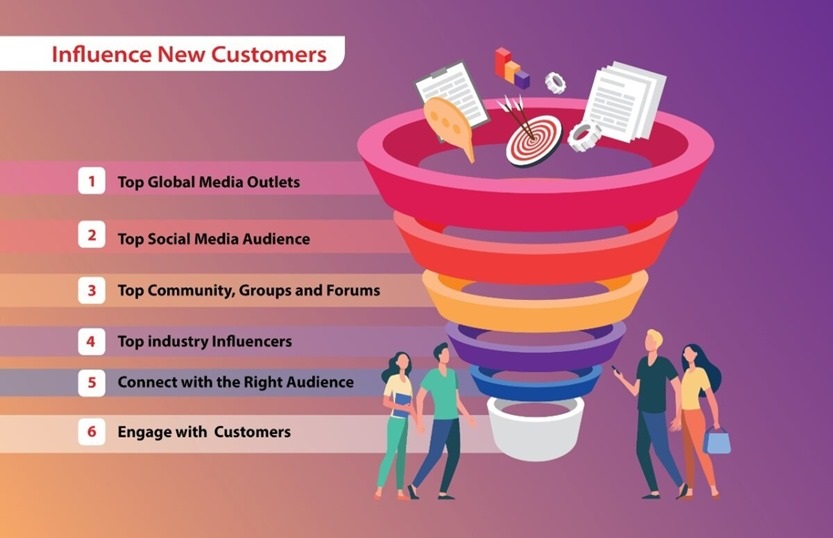
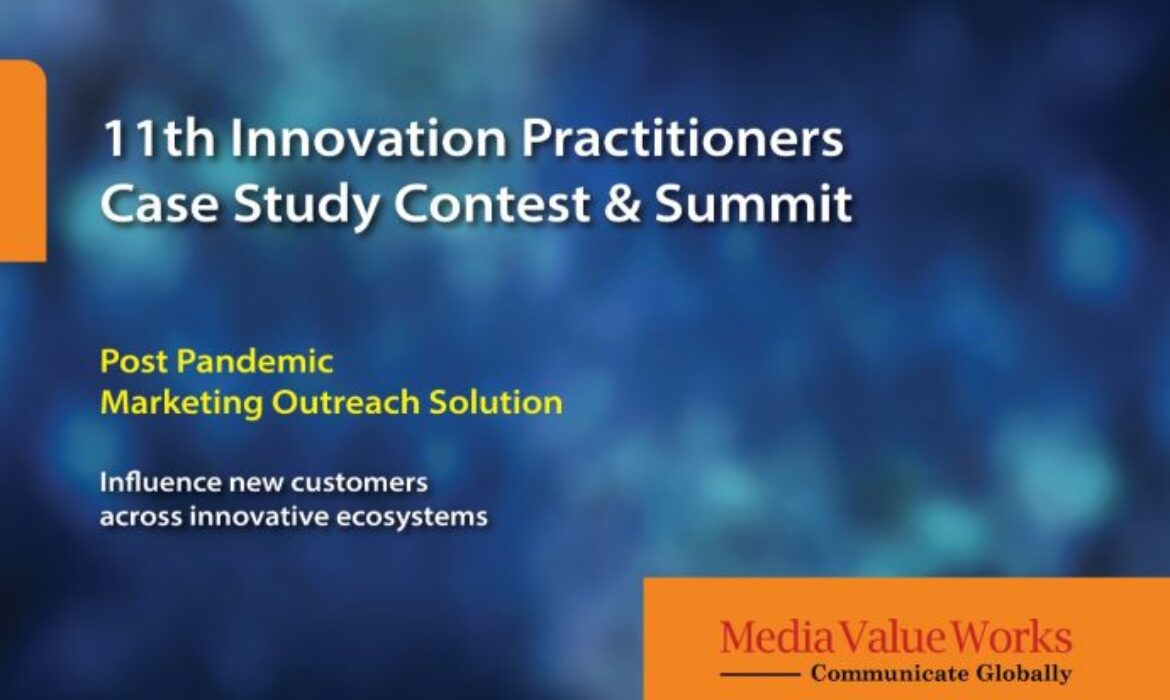
MVW Expertise : Effective outreach to influence new customers
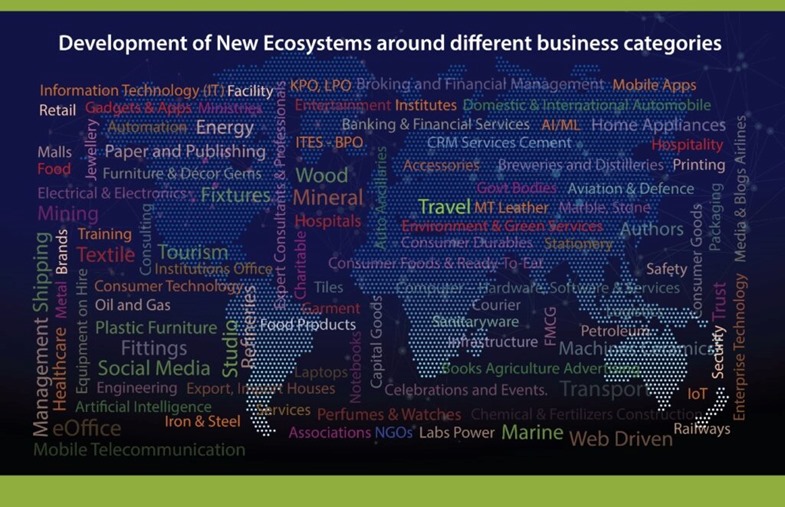
MVW Expertise : Effective outreach to explore newer ecosystems for business growth
Lets Collaborate to build powerful strategic content.
Schedule a free consultation meeting here:
Contact Us:
📧 Email: editor@mediavalueworks.com
🌐 Website: www.mediavalueworks.com
Partners


From Hashtags to Headlines: The Fusion of PR and Social Media
The convergence of public relations (PR) and social media has given rise to a powerful synergy that is reshaping the way businesses communicate and engage with their target audiences. Gone are the days when PR was solely about press releases and traditional media. Now, it’s all about hashtags, trending topics, and the art of turning social media buzz into headlines.
The Role of Social Media in Modern PR
Social media platforms have become an integral part of our daily lives. Whether scrolling through Facebook, tweeting on Twitter, or sharing stories on Instagram, people are constantly connected and engaged with these platforms. PR agencies have recognized the immense potential of social media as a tool for shaping public perception and building brand reputation.
Leveraging Hashtags for PR Success
Hashtags have become a cornerstone of social media communication. They enable PR professionals to tap into trending conversations and insert their brand into relevant discussions. Hashtags can help PR agencies amplify their message, increase visibility, and connect with a broader audience.
For instance, during a product launch or a major event, a well-crafted hashtag campaign can create excitement and anticipation among the target audience. PR agencies can use these hashtags to generate buzz, encourage user-generated content, and track the reach and engagement of their campaigns.
Real-Time Engagement and Crisis Management
One of the most significant advantages of social media in PR is engaging with the audience in real time. When a crisis arises, PR professionals can swiftly respond, address concerns, and provide accurate information to mitigate the damage. Social media allows instant communication, invaluable in managing a crisis and protecting a brand’s reputation.
Measuring the Impact of Social Media PR Efforts
In the realm of traditional PR, measuring the impact of a campaign was often a challenging and imprecise task. Social media, on the other hand, provides a wealth of data and analytics that can help PR agencies assess the effectiveness of their efforts. Metrics such as reach, engagement, likes, shares, and comments offer valuable insights into audience behaviour and sentiment.
By analyzing these metrics, PR professionals can refine their strategies, identify what works and what doesn’t, and make data-driven decisions to optimize their PR campaigns. This data-driven approach enables PR agencies to demonstrate their ROI to clients more effectively.
Building Relationships and Influencer Collaborations
Social media has also opened up new avenues for building relationships and collaborations. PR agencies can identify and partner with influencers who align with their client’s brand values and target audience. These influencers can help amplify messages and reach a broader, more engaged audience.
In today’s ever-evolving news cycle, the fusion of PR and social media is not just a trend; it’s the key to staying relevant and making a powerful impact in modern communications. By embracing the agility and adaptability of social media, PR agencies will ensure their client’s messages stand out and thrive in the digital age.
How Creativity in Pre-Sales Can Unleash Business Growth for Enterprises
~ Board is always open to explore Ideas and Collaborations
In the dynamic landscape of modern business, where innovation and adaptability are the keys to success, the role of a creative pre-sales executive has evolved into a pivotal force driving growth, fostering collaborations, and igniting fresh ideas. Often considered the bridge between a company’s creative vision and its strategic objectives, these executives play a crucial role in not only securing deals but also shaping the trajectory of the entire organization. In this blog, we explore how a creative pre-sales executive can serve as the fulcrum of business growth through innovative ideas and strategic collaborations.
1. Ideation and Innovation:
A creative pre-sales executive is not limited to merely pitching products or services; they are catalysts of innovation. By deeply understanding the needs of potential clients and combining it with creative thinking, they can tailor solutions that align perfectly with clients’ objectives. Their ability to think outside the box can open new avenues for the business, creating offerings that stand out in a competitive market.
2. Collaborative Problem Solving:
In the complex landscape of B2B interactions, a creative pre-sales executive acts as a collaborative problem solver. They don’t just push solutions; they engage in meaningful conversations with clients, dissecting challenges, and co-creating strategies. By collaborating closely with different teams within the organization, they bring forth multi-disciplinary perspectives that result in comprehensive and effective solutions.
3. Nurturing Relationships:
Building strong client relationships is an art, and creative pre-sales executives excel in this aspect. By actively listening, empathizing, and demonstrating genuine interest, they forge connections that go beyond transactional exchanges. These relationships not only result in successful deals but also foster long-term partnerships that contribute to sustained business growth.
4. Cross-Functional Synergy:
Creative pre-sales executives are natural connectors. They interact with various departments, from marketing and product development to finance and operations. This unique position allows them to identify opportunities for collaboration and synergy. By facilitating cross-functional dialogue, they ensure that the company’s creative vision is seamlessly integrated into its overall strategy.
5. Thought Leadership:
In today’s knowledge-driven economy, businesses value thought leadership. A creative pre-sales executive, armed with industry insights and trends, can position themselves as trusted advisors to clients. This enhances the business’s reputation and opens doors for innovative collaborations and partnerships that drive growth.
6. Pioneering Adaptability:
Business landscapes are constantly evolving, and a creative pre-sales executive possesses the adaptability needed to stay ahead. By embracing change and proactively seeking new approaches, they can help the organization pivot swiftly in response to market shifts, ensuring sustained growth even in uncertain times.
In essence, the creative pre-sales executive is more than a salesperson; they are strategic thinkers, collaborators, and innovators who infuse fresh ideas and foster partnerships that fuel business growth. By serving as the fulcrum between creativity and strategy, they balance the scales of innovation and profitability, ensuring that the business flourishes in an ever-changing world. As companies recognize the immense potential of these professionals, the role of the creative pre-sales executive is set to become an indispensable asset in the pursuit of lasting success.
How to excel in post-pandemic marketing strategies
According to an industry-leading CMO Spend Survey, post-COVID-19, there has been a significant shift in post-pandemic marketing strategies. With a high-level focus on digital marketing, data-driven marketing decision-making is anticipated to increase by 10.1% on average, with most budgets going to social media and digital content, advertising and promotions.
Businesses worldwide are compelled to adjust to the new normal. The pandemic’s effects on customer behaviour and purchase habits forced several companies to change their marketing plans. Businesses must re-evaluate their marketing tactics to stay competitive and spur growth in post-pandemic times. New tools on digital marketing, PR, social media platforms and emerging web 3.0 present various options for brands to influence and engage with new clients and grow their customer base worldwide.
It’s a paradigm shift, and finding new clients via new-age marketing standards is imperative for all categories of businesses.
- Market research
Market research allows businesses to understand better their target audience’s behaviour, tastes, and needs. Companies can use the analytics tools already integrated into social media sites like Twitter and Facebook to determine their target audience’s demographics, interests, and behaviours. This knowledge can assist firms in producing material that appeals to their target market and draws in new clients. - Utilize digital channels.
Businesses must take advantage of the pandemic’s acceleration of the migration to digital media. Companies must concentrate on digital marketing channels like social media, email marketing, and search engine optimization (SEO) to influence the target audience. Businesses can connect with their customers through digital channels and offer a tailored experience that suits their demands. Companies can establish relationships and build trust with potential clients through social media. Establishing a positive reputation for a business can be facilitated by responding to comments, direct messages, and social media mentions. - Pay attention to customer retention.
Due to the pandemic, clients are now more loyal. Thus, firms should put more effort into keeping them. Businesses might use loyalty programs, individualized communications, and top-notch customer service. It is less expensive to keep existing clients than to get new ones because doing so guarantees a steady flow of income.

- Readiness for m-Commerce
Businesses must embrace online commerce with increased preferences of users on m-commerce and e-commerce. Companies can use E-commerce platforms to offer their goods and services online, and Marketplaces like Amazon and eBay can provide businesses with a way to expand their audience. - Make Useful Content
People now consume content differently as a result of the pandemic. Customers seek out beneficial, engaging, and entertaining content that provides value to their lives. Businesses can produce pertinent material that reflects their brand and appeals to their target market. Companies may use content marketing to attract new clients, keep current ones, and position themselves as thought leaders. - Generate Impact via social responsibility.
Due to the pandemic’s emphasis on its significance, businesses must invest in social responsibility. Companies can participate in social responsibility programmes with their consumers and support causes that reflect their values. Companies can stand out from their rivals and gain the trust and loyalty of their customers by being socially responsible.
Reach me at my email: rachana@mediavalueworks.com

About the Author: Rachana Chowdhary
Rachana Chowdhary founded an innovative global communications agency – MediaValueWorks, in 2013. She has over 23 years of experience across traditional and digital media, PR, branding and marketing strategies, and strategic content management. A graduate of Mumbai University, she also mentors women entrepreneurs and small and medium businesses.
Rachana Chowdhary
Global Content and Communications Leader
Forbes Council Member

Founder – MediaValueWorks – Communicate Globally
CEO – MVW-MSME Development Centre
Publisher – India-Press-Release.com & InstaaPR
Editor – IndiaTechnologyNews & Bollywoodtimes11
MVW Network International Pvt Ltd.
Mumbai | New Delhi | Bengaluru | Singapore | San Francisco | Toronto
Brand Consulting, Content & Design, Digital Marketing & Events
Content Publishing across 125 countries in over 45 languages
Member – Public Relations Society of India
Jury – APAC Stevie Awards
Awards and Recognitions –
2022: 100 Most Important Professionals by Reputation Today
2021-22 Woman of Excellence Award – By Indian Achievers’ Forum
2017 Leading Women Entrepreneur of India – World Marketing Federation
2016 Best Marketing Outreach India-Africa – By ASSOCHAM
Being a Responsible Communicator helps you Build your Online Reputation
Globally, Data journalism has had a transformative impact on content publishing standards. Reporters, Journalists, Content writers, freelancers, social media users, bloggers, and website or content publishers need to carry out more accurate, transparent, and fact-led storytelling.
April 2 is an International Fact-Checking Day.
Google presents advanced ways on how can you find trustworthy information. Now, wherever you’re searching, you’ll see three dots next to most results on Google Search. Tapping those three dots gives you more about the background, why this page, who wrote this page and reviews from others. It will help you discover and establish more credibility for your searches. Also, these would populate organic search results not driven by paid ads.
Use the right strategies, access the right tools and follow techniques to gather and analyze information before publication. This is critical to maintaining your online reputation.
Responsible communications ensure you maintain and empower your online reputation. Building a strong online reputation requires a strategic and consistent approach. It helps you gain a competitive advantage, attract top talent, manage crises, engage with customers and influence stakeholders. Improved brand recognition enables you to win new customers, enhances customer loyalty and helps you build an overall increased market share.
While communicating, the tone of voice of your messages significantly impacts how the public perceives you and your brand. By using the right strategies, communicators can establish credibility, build trust, and engage the audience, ultimately increasing the effectiveness of their communication.
You can use the following best practices to develop your communication skills:
Transparency: Be candid, truthful and open in all communications. Try to provide accuracy to the information you are sharing and do it honestly. While in most cases, the juggle is when to make an announcement; it’s recommended to wait, announce, and publish what is definitive.
Promptness: Minimizing delays in reverting to customers or stakeholders in day-to-day communications helps establish more robust relationships. It demonstrates your readiness to handle projects and affirms your intent to the client for positive decision-making. Delayed transmissions lead to miscommunication or reputational harm.
Respectful: Interaction with customers and stakeholders demonstrates you and your personality traits. Dignity, respect and values are crucial to maintaining relations with professionals, staff, well-wishers, partners and media. In the social media era, there is little scope for ‘Being-on-stage’ or ‘Being-back-stage’. Hence, to maintain your online reputation, it is most effective to always communicate with respect. Paying attention to feedback and queries helps build your connections stronger across geographies.
Adapt Inclusivity Since the world is a stage now, one must learn to communicate inclusively. For years, we trained ourselves to speak with a particular group or a segment of people; now, you need to be careful in the choice of words, thereby not impacting or pointing towards any section of society. To ensure this, adopt Inclusivity in your approach. Make sure all members of your audience can access and understand your communication. Take into account any potential linguistic and cultural hurdles.
Consistency: To influence your customers and stakeholders and to establish your narrative or point of view as an expert, it’s essential to convey your ideas consistently. While consistent messaging does not mean repeated messages, it needs progressive consistency. Make sure that the message is delivered through all channels of communication always.
Take charge and be proactive: As a responsible communicator, you need to be able to think through and plan should there be any potential challenges or outcomes post your communications. Consider potential problems in advance and deal with them before they become more significant problems.
Improvisation:
- Use feedback and data to pinpoint improvement areas to monitor and tweak your communications.
- Employ straightforward, uncomplicated language that your audience can understand.
- Avoid using jargon or technical phrases that could be confusing.
Citations:
Zraková, Diana, Kubina, Milan, and Koman, Gabriel. “Influence of Information-communication System to Reputation Management of a Company.” ScienceDirect, 22 Jun. 2017, https://doi.org/10.1016/j.proeng.2017.06.172.
Oh, Jeyoung, and Ki, Eyun-Jung. “Factors affecting social presence and word-of-mouth in corporate social responsibility communication: Tone of voice, message framing, and online medium type.” ScienceDirect, 12 Apr. 2019, https://doi.org/10.1016/j.pubrev.2019.02.005.
Reach me at my email: rachana@mediavalueworks.com

About the author: Rachana Chowdhary
Rachana Chowdhary founded an innovative global communications agency – MediaValueWorks, in 2013. She has over 23 years of experience across traditional and digital media, PR, branding and marketing strategies, and strategic content management. A graduate of Mumbai University, she also mentors women entrepreneurs and small and medium businesses.
Rachana Chowdhary
Global Content and Communications Leader
Forbes Council Member

Founder – MediaValueWorks – Communicate Globally
CEO – MVW-MSME Development Centre
Publisher – India-Press-Release.com & InstaaPR
Editor – IndiaTechnologyNews & Bollywoodtimes
MVW Network International Pvt Ltd.
Mumbai | New Delhi | Bengaluru | Singapore | San Francisco | Toronto
Brand Consulting, Content & Design, Digital Marketing & Events
Content Publishing across 125 countries in over 45 languages
Member – Public Relations Society of India
Jury – APAC Stevie Awards
Awards and Recognitions –
2022: 100 Most Important Professionals by Reputation Today
2021-22 Woman of Excellence Award – By Indian Achievers’ Forum
2017 Leading Women Entrepreneur of India – World Marketing Federation
2016 Best Marketing Outreach India-Africa – By ASSOCHAM
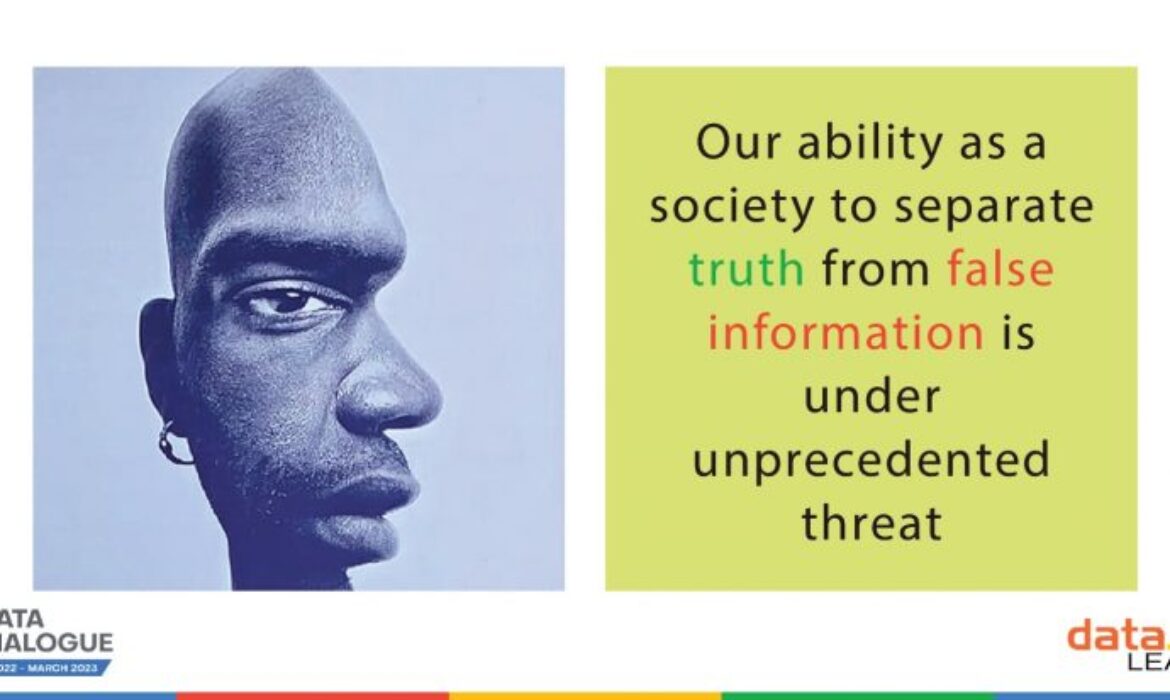
(Picture credit-20th Data Dialogue in New Delhi)
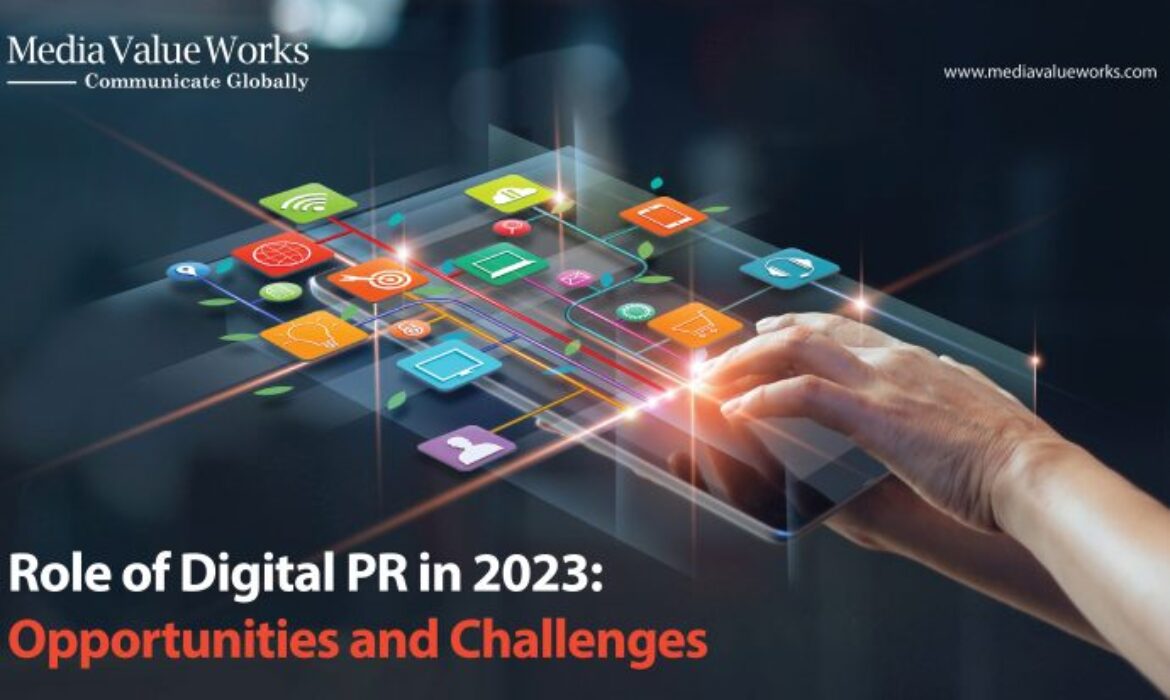
Role of Digital PR in 2023 Opportunities and Challenges
In 2023, digital PR will become even more critical for businesses and organizations as the world becomes increasingly digitalized. The role of digital PR professionals will involve crafting and disseminating content through various digital channels, such as social media, online news outlets, and industry-specific websites, to shape public perception and build brand awareness. This will include creating and distributing press releases, crafting and publishing thought leadership pieces, and leveraging influencer marketing to reach key audiences.
One of the main challenges digital PR professionals will face in 2023 is the sheer volume of content being produced and distributed online. With so much noise and competition, it will be important for digital PR professionals to be able to create and distribute content that stands out and captures the attention of their target audiences. This will require a deep understanding of the latest trends and technologies and the ability to think creatively and strategically about how to reach and engage different audiences.
Another significant trend likely to continue in 2023 is using data and analytics to measure the impact of digital PR campaigns. Digital PR professionals will be expected to be able to use a variety of tools and platforms to track and analyze key metrics, such as website traffic, social media engagement, and media coverage. Using these tools, digital PR professionals can identify what is working and what isn’t and make data-driven decisions about adjusting their strategy to achieve better results.
In addition to these trends, in 2023, digital PR will also involve working closely with other teams such as SEO, CRM, Data Science and Business Development. SEO will help drive organic traffic and improve the website’s visibility on search engines. CRM will help to manage and maintain customer relationships. Data science will help to analyze data and make data-driven decisions. And business development will help to drive sales and revenue.
In 2023, digital PR professionals will need to be versatile and able to adapt to the ever-changing digital landscape to help their clients succeed. They will also need to be well-versed in the latest technologies and platforms, such as chatbots, virtual reality, and blockchain, to stay ahead of the curve and relevant in a constantly evolving industry.
There are several challenges that digital PR professionals will face in 2023:
- The increasing volume of content: With so much information and content being produced and distributed online, it will be challenging for digital PR professionals to create and distribute content that stands out and captures the attention of their target audiences.
- The need for personalization: Audiences are becoming increasingly segmented and targeted, and digital PR professionals will need to create personalized content that speaks to specific groups to be effective.
- The use of AI and automation: While AI and automation can help digital PR professionals to scale their efforts and reach a larger audience, they will also need to be able to use these tools effectively and understand their limitations to avoid negative consequences.
- The importance of data and analytics: Digital PR professionals will need to be able to use data and analytics to measure the impact of their campaigns and make data-driven decisions.
- The need to stay up-to-date: The digital PR industry is constantly evolving, and professionals will need to stay up-to-date with the latest trends, technologies, and best practices to be effective.
- The need to work closely with other teams: Digital PR professionals will need to work closely with other teams, such as SEO, CRM, Data Science and Business Development to achieve overall business objectives.
- The need for ethics and transparency: With the rise of disinformation and fake news, it will be important for digital PR professionals to ensure that their campaigns are ethical and transparent to maintain trust and credibility with their audience.
- The need for crisis management: With the rise of social media and the ability for information to spread quickly, it will be important for digital PR professionals to be prepared to handle crisis situations and mitigate any negative impact on their client’s reputations.
To face the challenges of digital PR in 2023, digital PR professionals can take the following steps:
- Stay up-to-date with the latest trends and technologies: To create and distribute content that stands out and captures the attention of their target audiences, digital PR professionals will need to stay up-to-date with the latest trends and technologies in the Industry.
- Personalize content: To effectively reach and engage with their target audiences, digital PR professionals will need to create personalized content that speaks to specific groups. This will require a deep understanding of the target audience and the ability to create content that resonates with them.
- Use data and analytics: To measure the impact of their campaigns and make data-driven decisions, digital PR professionals will need to be able to use a variety of tools and platforms to track and analyze key metrics, such as website traffic, social media engagement, and media coverage.
- Leverage AI and automation: To scale their efforts and reach a larger audience, digital PR professionals can use AI and automation to analyze data, create content, and distribute it at a faster rate.
- Work closely with other teams: To achieve overall business objectives, digital PR professionals will need to work closely with other teams such as SEO, CRM, Data Science and Business Development.
- Maintain ethics and transparency: To maintain trust and credibility with their audience, digital PR professionals will need to ensure that their campaigns are ethical and transparent.
- Have a crisis management plan: To handle crisis situations and mitigate any negative impact on their clients’ reputation, digital PR professionals will need to have a crisis management plan in place.
- Continuously learn and develop new skills: As the industry is constantly evolving, digital PR professionals will need to continuously learn and develop new skills to stay relevant and effective.
In 2023, digital PR will be more important than ever, and digital PR professionals will need to be skilled at creating and distributing high-quality content, leveraging the latest trends and technologies, and using data and analytics to measure and improve their campaigns. They will also need to work closely with other teams and be versatile to adapt to the ever-changing digital landscape.
Contact us to learn how we can help you develop a better Marketing Strategy for your business.
Credits:
Content: Keshav Bhardwaj
Publisher: Media Value Works
Social Media: Ravish Dhiran
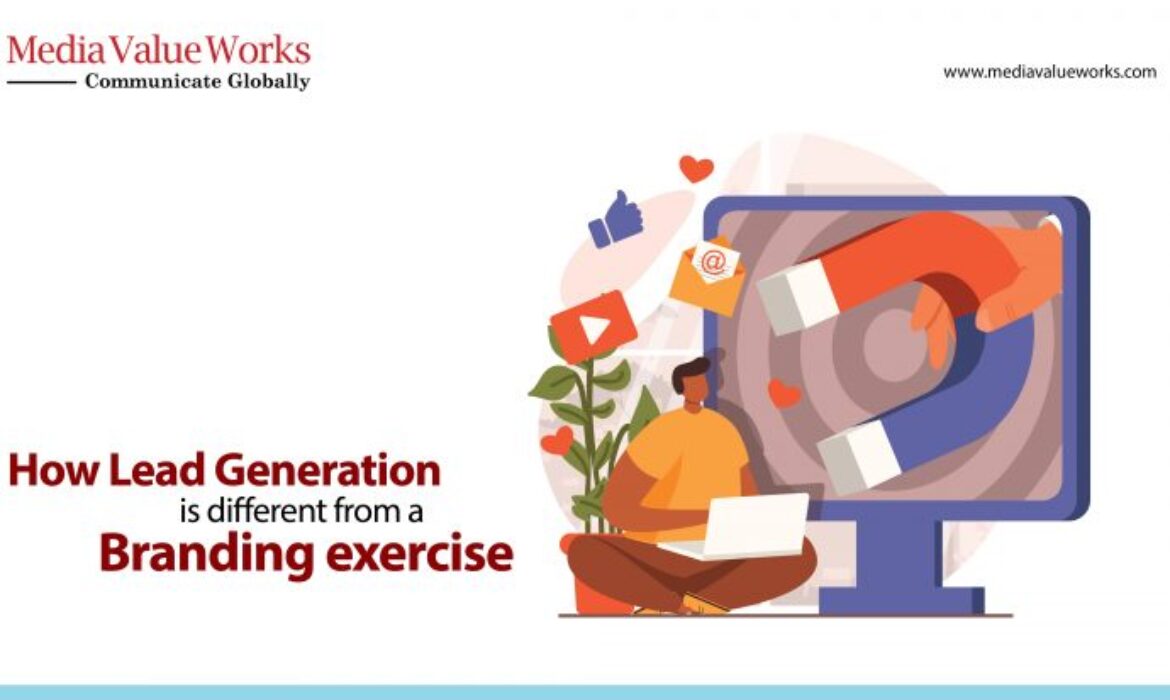
How Lead Generation is different from a Branding exercise
Many marketers need help deciding if they should focus on lead generation or put their effort into brand awareness. The struggle is about balancing the two because your business needs both. Lead generation and branding are like two sides of the same coin, and you cannot ignore one for the other. In fact, for a digital marketing strategy to be successful, both must go hand in hand. They are learning how and when to prioritize what can be a game-changer for the growth of a business.
Let’s first learn what lead generation is and what branding is. When we know these two terminologies, we can better appreciate their differences and significance.
What is Lead Generation?
Lead generation is when a business attracts potential prospects to its website and converts them into leads. These leads eventually become valuable customers. Lead generation is a specific task and targets the opportunity for a defined purpose. The purpose can be to get them to check a particular landing page, sign up for a newsletter, or purchase a product. The success of a lead generation campaign can be measured using defined metrics like – the number of sign-ups or the number of products sold.
What is Branding?
Branding, as the name says, is about increasing awareness about a brand. The focus of a branding campaign is to reach more people and let them know about the brand. Social media ads, promotions at networking events, social media campaigns, etc., are typically used to increase a brand’s reach digitally. The primary aim is not to generate sales but to make people aware of a brand name. Branding helps establish a business as a recognized and trusted name in its niche.
How Lead-Generation Campaigns Differ from Other Types of Marketing Communications
Different from conventional advertising or marketing communications is lead generation. The primary distinction is direct marketing, usually referred to as direct-response marketing communications, in lead creation. “Direct marketing” refers to targeted, measurable marketing tools, strategies, and initiatives motivated by return-on-investment (ROI) concerns. The main distinction is that direct marketing aims to inspire action. Whatever the marketer’s objective is, the action could be anything from a click to a call to a store visit.
Direct marketing is the foundation for today’s successful marketing strategies. It is based on customer information collected, maintained in a database, and used with various analytical and communications tactics. E-commerce, data mining, customer relationship management (CRM), and integrated marketing communications are some strategies. But generating leads for a sales force—whether it be an outside sales resource like a distribution channel partner or representative, an inside sales team, or both—is the main contribution that direct marketing offers to the business marketing equation.
B2B Direct marketing is a vast industry.
Interesting data on the scope and impact of direct marketing in corporate markets is published by the Direct Marketing Association. From The DMA 2010 Statistical Fact Book, have a look at these:
- B2B direct marketing spending in all media channels in 2010 was $74.6 billion.
- The spending growth rate (CAGR) between 2009 and 2014 is expected to be 4.9 per cent for B2B, compared to only 4 per cent for direct consumer marketing spend.
- B2B sales driven by direct marketing in 2010 represented $786 billion.
- Sales growth CAGR from 2009 to 2014 is estimated at 5.4 per cent, compared to 4.9 per cent in consumers.
An estimated 3.9 million people were employed in B-to-B direct marketing in the U.S. in 2009. This is big business in every sense of the word.
In addition to direct-response marketing, lead generation differs from conventional marketing communications in two significant areas. One aspect of lead creation is the balance between quantity and quality. Salespeople are a costly resource for a business, and making them more productive is the role of lead generation. Thus, having a large audience and a high volume is optional. In actuality, fewer, higher-quality leads always outweigh more, lower-quality leads.
Second, lead generation frequently takes place on the ground level. It assists sales, generates field results, and establishes income connections. Lead generation is commonly regarded as a more tactical set of actions than strategic marketing that occurs in corporate communications, brand creation, and public relations and is a part of a field marketing function. Some lead generation professionals feel underappreciated by general marketers who focus on so-called bigger-picture marketing because of their largely tactical role. The B-to-B industry is still debating this issue. But anything that is the primary job of 76 per cent of CMOs deserves a lot of respect.
Two sides of the same coin
You can see that despite their differences, lead generation and branding significantly impact one another. Lead generation comes after effective branding. The brand is strengthened when leads turn into paying clients. Most of the time, combining the two will yield the best results rather than choosing one. It all comes down to applying the proper method at the appropriate moment. Your marketing efforts will be successful if you can pull them off.
Contact us to learn how we can help you develop a better Marketing Strategy for your business.
Credits:
Content: Keshav Bhardwaj
Publisher: Media Value Works
Social Media: Ravish Dhiran
Top 6 Types of Content Writing in 2022
With the increased penetration of technology and the internet, the content appetite has been amplified drastically. The rise of online media is dramatically altering the ways people consume content on a micro-level, creating a new user-centric communication model.
Content writing is the process of creating, editing, and publishing content for various formats such as social media copy, articles, press releases, video scripts, white paper, product descriptions, brochures, landing pages and more.
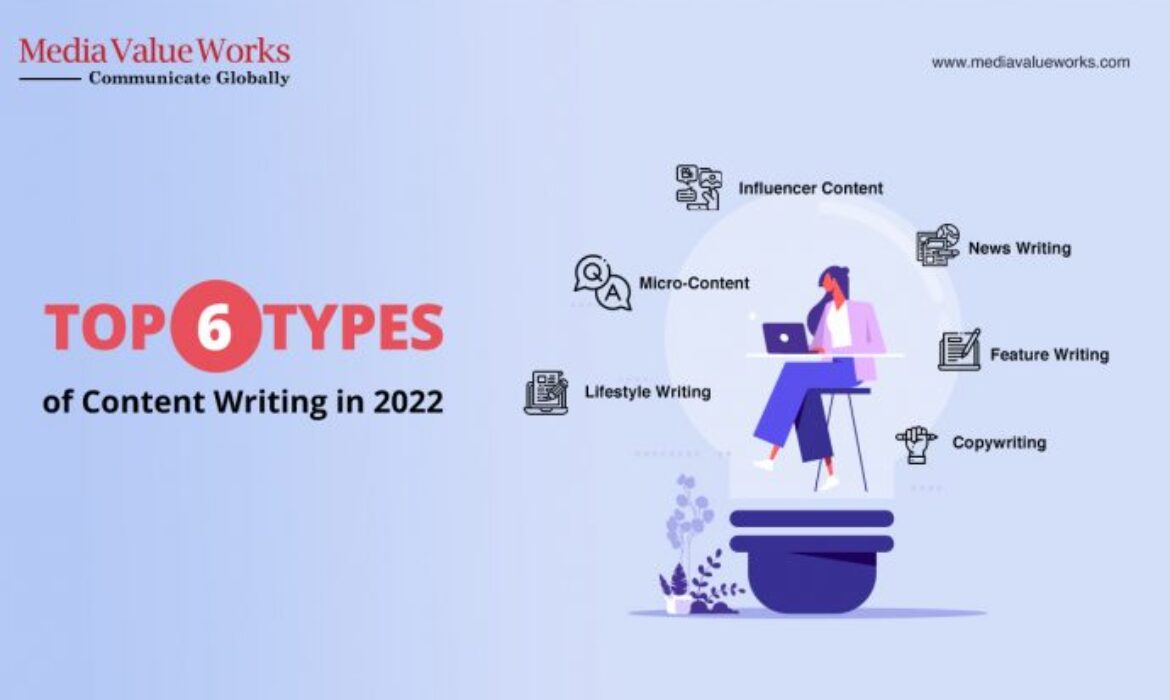
Let’s take a look at the top 6 types of Content writing in 2022:
1. Micro-Content
Microcontent conveys pieces of information that answer a specific question or leave an impression on the audience in a short period of time, which is entirely necessary for today’s audiences. It is written copy, imagery, or video content that can be consumed in 10-30 seconds or less. Infographics, short video clips, e-mail subjects, captions, webpage tiles, short listicles and precise social media posts can be segments of micro-content.
2. Influencer Content
Social media influencers who possess a dedicated social following and are viewed as experts within their niche creates content using endorsement and product mentions. The content strategy is to generate creative, splendid and pertinent content, which can be in the form of short video clips, photo uploads, storytelling, live product demos and more. Due to higher interaction with followers, the content generates a good impact on existing and potential followers. The endorsed and branded content serves as social proof to the brand’s potential customers and maintains brand identity.
3. News Writing
News writing is writing for publication in a newspaper, often reporting current events and journalism. It is the most sophisticated, comprehensive, and formal way of writing that follows an inverted pyramid structure. Lead (most important information comprises 5W and 1H), body (background details and expanding the topic) and tail (extra information, assessment and interesting facts). The news story should comprise elements of newsworthiness such as proximity, timeliness, human interest and conflict.
4. Feature Writing
A feature is a write-up on a subject of the latest concern and interest to a common reader. It is not a news story but derived from a piece of news. Features aimed at informing, entertaining, enlightening and providing facts in an exciting form for rapid reading. A broader explanation of the topic with relevant facts and background detail in an interesting way is the content strategy for writing features. The feature structure comprises the introduction, elaboration, elucidation, interpretation, a narration of facts, future possibilities and conclusion.
5. Lifestyle Writing
Lifestyle writing is all about covering stories that have human interest, positivity, hope and entertainment. It is an umbrella term for specialized beats such as travel, food, fashion, home décor, health, wellness, stories of celebrities and other soft beats. Readers often find it more exciting and wonderful to apply kinds of stuff in their life whenever there is some free time. Most people spend reading lifestyle stories. Here, the writing strategy is different and is human and soft information-centric, requiring research and looking for news angles.
6. Copywriting
Copywriting is the process of writing a persuasive piece of content that motivates people to take some action, such as making a purchase, clicking on the link, donating to a cause, scheduling an appointment etc. It comprises a clear message set using different advertising channels such as websites, print and digital ads, newspapers, magazines, and brochures. Businesses communicate effectively via copywriting with existing and potential customers to expand their market reach.
Over the period of time, the mode of communication expanded, which eventually led to content being copied, manipulated and misinterpreted. Media Value Works, on multiple fronts, understand the client’s business objectives and creates goal-oriented content for better reach among the target audience and offer end-to-end creative, communication-centric, complete content development services.
Contact us to learn how we can help you in developing in better content strategy for your business.
Credits:
Content: Vaibhav Chandra
Graphics: Shrikant Landge
Publisher: Media Value Works
Social Media: Ravish Dhiran
Top 5 Trends that are reshaping the Public Relations Industry in 2022
Public Relations (PR) is a set of strategic communication used by organizations or individuals to build and sustain relations amongst the target audience and various stakeholders. It envisages creativity, content curation, and reaching out to the target audience with exemplary communication efforts. Due to digitization, industrialization and global disruption, the human behavioral pattern has developed, so public relations’ role and working style has changed multifaceted.
The pandemic and technological trends like the utilization of online media, social media and digital marketing have reinforced the adoption of new-age technology for business development and effectively integrated marketing communication efforts which actively contributed to the transformation and expansion of the public relations industry.
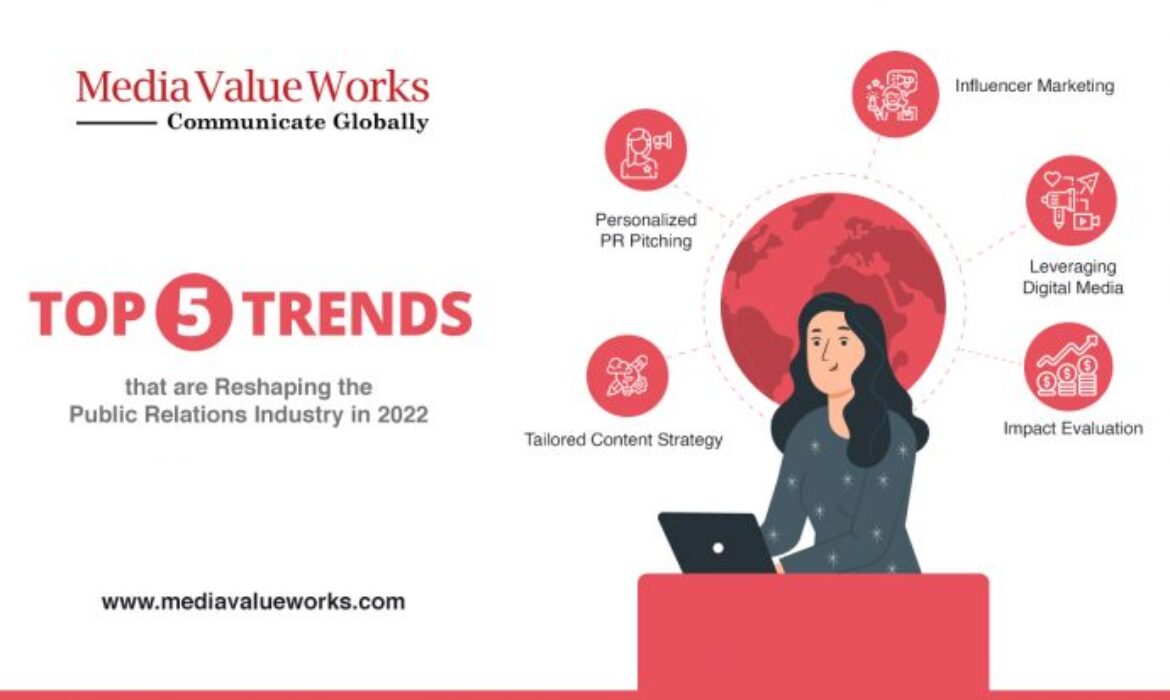
Here are the top 5 notable trends that are reshaping the public relations industry in 2022:
1. Personalized PR Pitching
Communicating with key media with the same set of messages proved to be impotent as every journalist has a different mindset. Personalized pitches to specific journalists or influencers first present an eye-catching idea that is hard to miss. Second, tap directly on their interest to provide precise information in news-worthy content that maximizes the chance of being published by the targeted media outlets. It empowers PR professionals to create instant trust and nourish the relationship with media outlets and professionals who become supportive when pitching in the future.
2. Influencer Marketing
With the increased penetration of online and social media platforms, audiences have begun to trust peers’ recommendations as it generates curiosity regarding products or brands. People find more authenticity in content and recommendation from actual consumers, celebrities or influencers rather than in other forms of promotions and advertising.
Influencer marketing involves endorsements and product placement from influencers, people and organizations who have an expert level of knowledge or social influence in their field. They upload sponsored content on their social media platforms like Facebook, Instagram, YouTube, Twitter, LinkedIn, Snapchat, or other online channels.
3. Tailored Content Strategy for the greater outreach
A customized content strategy builds customer loyalty and meets the objectives because it directly meets the target audience and potential customers. Tailored content is all about delivering experiences that speak directly to target customers.
PR professionals must emphasize their content strategy efficiently, ensuring its uniqueness engages and reaches the target audience. Incorporating appropriate keywords and other SEO optimization tactics makes the content visible on initial search pages, increasing search engine rankings. The personalized content strategy supported by data analytics and conclusion from existing campaigns proves a great way to place the client’s brand in the right spots.
4. Leveraging the power of Digital Media
With the news earlier restricted to only the traditional means such as newspapers and magazines, the entry of this new medium transformed the landscape and made information and news available anytime, anywhere.
From online press releases and sharing on social media platforms, the possibilities of digital PR are endless. With Web 3.0, marketing communication horizons are expanding further and brands can extend their presence into the digital world and gain immense publicity across the platforms that their target audience uses.
5. Impact Evaluation
In the Public Relations domain, it’s a challenge to show the impact generated as it is less tangible than other services. All clients want to know the impression created and whether the money, time and efforts that went into a campaign changed consumer behaviour and profit generated.
To prove the campaign’s ROI, meaningful metrics that relate directly to business goals and objectives are required. PR firms can create winning strategies, deploy them through suitable platforms, and create and measure campaign success metrics.
Credits:
Content: Vaibhav Chandra
Graphics: Shrikant Landge
Publisher: Media Value Works
Social Media: Ravish Dhiran
Top 6 functions of the Public Relations
Public Relations is the blend of art and science which manages the flow of communication among an organization and its target audience to build, manage and sustain its positive reputation. It involves monitoring and evaluating public attitudes and maintaining the mutual relationship. The public could be employees, the financial public (shareholders, financial media, investment and financial analysts), potential customers, government, women, youth and the general public.
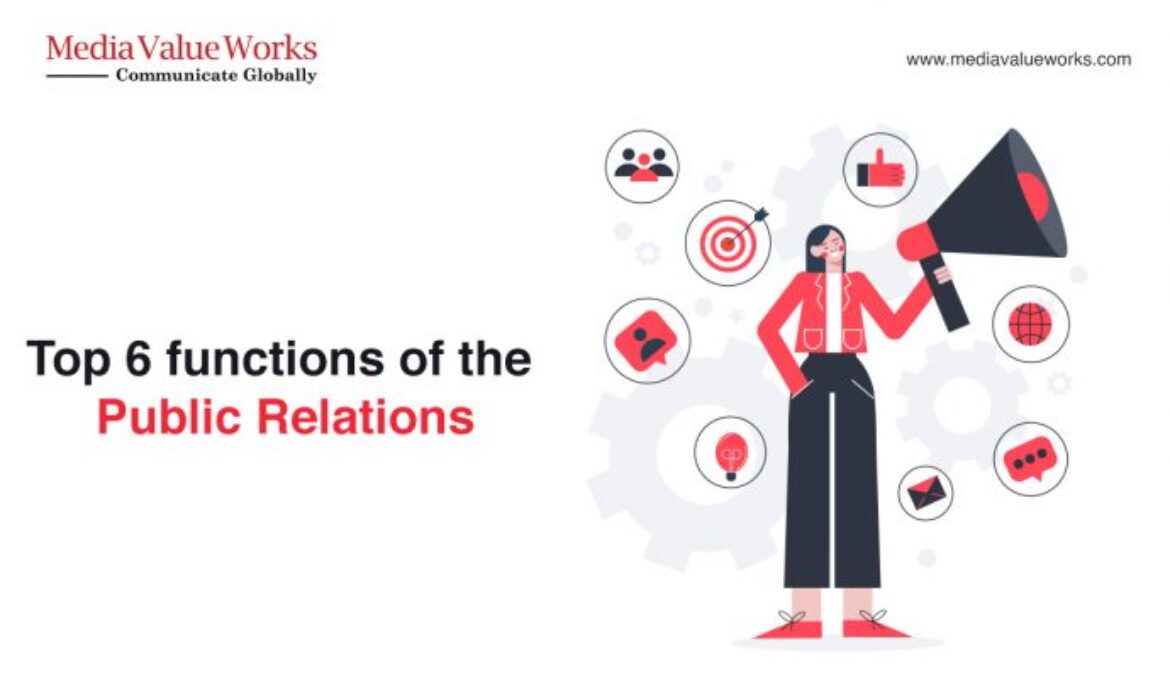
Let’s discuss the top 6 functions of the public relations –
1) Target Audience Relations – For any flourishing enterprise, it is imperative to create and maintain a positive relationship with its target audience. Every activity must be seen, and the voice is heard by the target audience for conveying a strong message that says you are all about the common cause.
The public relations department often works closely across departments to achieve good relations through newsletters, magazines, corporate video, writing brochures, and preparing audio-visual materials for training and policy-transmission purposes.
2) Media Relations – Media is considered a crucial target public is requiring deliberate and effective effort. It is a mutually beneficial relationship between journalists and public relations professionals. One of the most significant benefits for journalists is the easy access to story ideas and sources. The public relation department is the one that supplies all information to media persons and organizations. and are responsible for dealing with and maintaining better relations with the media.
3) Crisis Communication – Crisis communication is all about managing media representation and relationships whenever some kind of threat takes place related to an organization’s reputation. People in the public relations department handle the components of a crisis communication plan. They are well versed in designating an official spokesperson, content strategy, and logistics to avert the crisis from happening again. The public relations function entails the development and targeted release of messages, both for the internal and external audience. The spokesperson is trained to manage challenging and hostile questions in a peaceful manner.
4) Lobbying – The Public Relations department comprises highly efficient communication professionals who are well-versed in influencing decisions. Lobbying refers to understanding their clients’ concerns, needs, and interests and using their knowledge of the legislative process to educate key decision-makers. It involves interacting with government officials and legislators to influence government decisions that affect the organization’s functioning.
5) Brand Reputation – The fundamental function of public relations is to manage and influence the brand’s positive perception within the target audience. All brand communication efforts comprise the organization’s core values and mission statement, which is reiterated during the dissemination of the message. The PR team communicates information regarding products to the public through media sources, and this leads to comprehensive awareness regarding products among people in the market and boosts brand value.
PR professionals work closely with the marketing team to make noise regarding the product, reinforcing advertising and promotion campaigns. Such strategies are imperative to uphold any enterprise’s goodness, prosperity, and common welfare facets.
6) Counseling – The Public Relations department is very energetic and active as they embrace themselves with new happening and trends across the market and daily basis. They did research, so they have a good understanding of the target audience and concerned market. This department plays a crucial role in marketing communication efforts and empowers top-level management to make multiple decisions. It keeps them aware of all public matters and provides them suggestions in case of any problem or product mishap.
Credits:
Content: Vaibhav Chandra
Graphics: Shrikant Landge
Publisher: Media Value Works
Social Media: Ravish Dhiran